

BETHLEHEM, Pa. — Brad Klein reviews the week’s astronomical highlights with Bethlehem’s "Backyard Astronomy Guy," Marty McGuire.
This week, our inner solar system has a visitor. It’s Comet C/2023 A3 Tsuchinshan-ATLAS. It’s been visible through telescopes since its discovery last year by observers in China and South Africa.
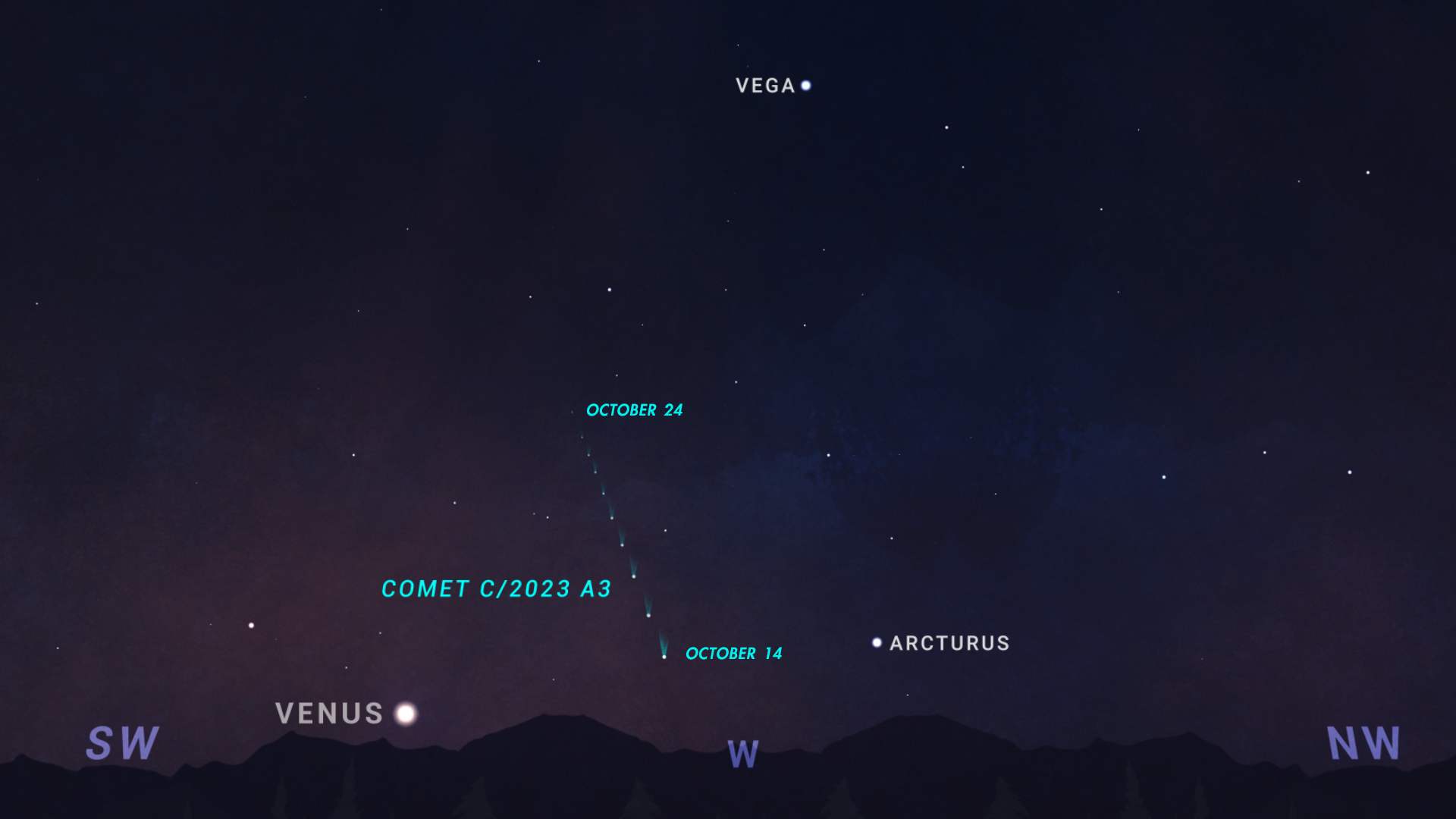
But now that it is near its closest approach to our sun, casual stargazers may get a chance to see this visitor from the far outer solar system. The comet made its closest approach to the Sun in late September and will pass about 44 million miles from Earth on Oct. 12, according to Beth Ridgeway, a social media blogger for NASA.
And don’t expect to catch it on its next visit. This comet does not come around very often.
“It was only discovered last year, but scientists have determined that the last time it came by and was visible to anybody on earth was 80,000 years ago,” according to McGuire. “So, we’re talking about our ancient ancestors.”
Will stargazers in the Valley be able to see this celestial wanderer? McGuire says it’s hard to predict how visible comets will be in the night sky. But there is a chance that it will be visible in mid-October, low in the western sky, after sunset.
“By Oct. 14, the comet may remain visible at the midway point between the bright star Arcturus and the planet Venus,” according to a NASA publication.