
BETHLEHEM, Pa. — The World Cup has come to an end, but an American journalist won’t be coming home.
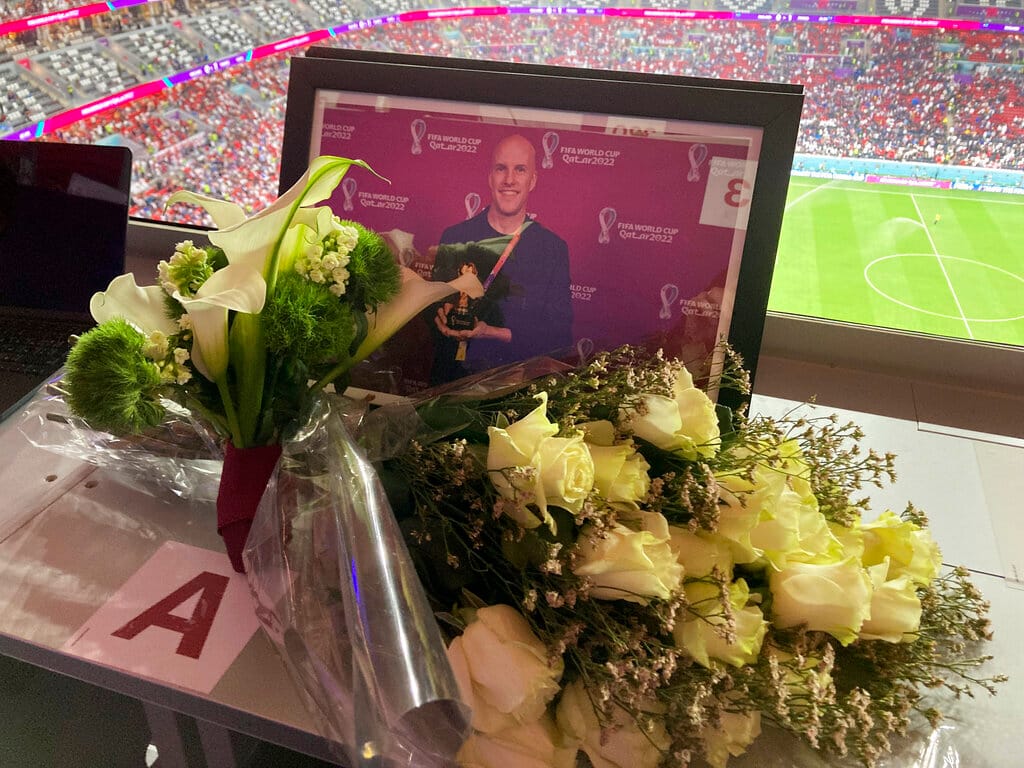

Sports reporter Grant Wahl died while covering the event in Qatar. Wahl’s wife said the cause of death was a ruptured aortic aneurysm at age 48.
"I think he was under a lot of stress covering the event and I think he also suffered from some flu or flu-like symptoms," said Dr. James Wu, Lehigh Valley Health Network's chief of the division of cardiothoracic surgery.
"So there's a lot of different issues that occurred,"
"I think he was under a lot of stress covering the event and I think he also suffered from some flu or flu-like symptoms, so there's a lot of different issues that occurred."
Dr. James Wu, chief, division of cardiothoracic surgery, Lehigh Valley Health Network
Wu said about five to 10 patients out of 100,000 each year develop the condition, and of those patients, 10,000 to 15,000 per year will die from it.
According to the doctor, a cause of the condition is very high blood pressure over an extended period of time.
“Not just kind of, you know, a little bit higher than normal, but high like 150s, 160s, 170s or higher, sometimes we see patients coming into the emergency room with a blood pressure of 200,” Wu said.
He said smoking or a genetic disorder also could lead to an aortic aneurysm.
When it comes to symptoms, the cardiothoracic surgeon said they may not be easy to identify.
"Typically, aortic aneurysms do not have any symptoms, at least in the chest, because in the chest, the aorta is surrounded by the lung and other soft tissue that you don't really feel it,” Wu said.
He went on to say that if symptoms are felt, it typically presents as chest pain, though that’s a common symptom for less severe conditions as well.
- Sports reporter Grant Wahl died from a ruptured aortic aneurysm while covering the World Cup
- LVHN doctor said a cause of the condition is very high blood pressure over an extended period of time.
- Those who have a family history of aneurysms should get checked by a doctor
The doctor said prevention is hard because many people don’t know they have an aneurysm.
“So unless you know that you have an aneurysm, it's hard to prevent that because you wouldn't know that, right?" he said. "Until you get a CT scan or a CAT scan or sometimes an ultrasound.”
Those who have a family history of aneurysms should get checked by a physician.